How to set up and use Cloudflare workers (Manual way)
What are Workers?
Cloudflare Workers runs a small piece of code on Cloudflare's servers. In this tutorial the worker takes your users' requests and sends them on to your HiddifyManager server. Users only see the worker's address; your server's domain and IP stay hidden behind it.
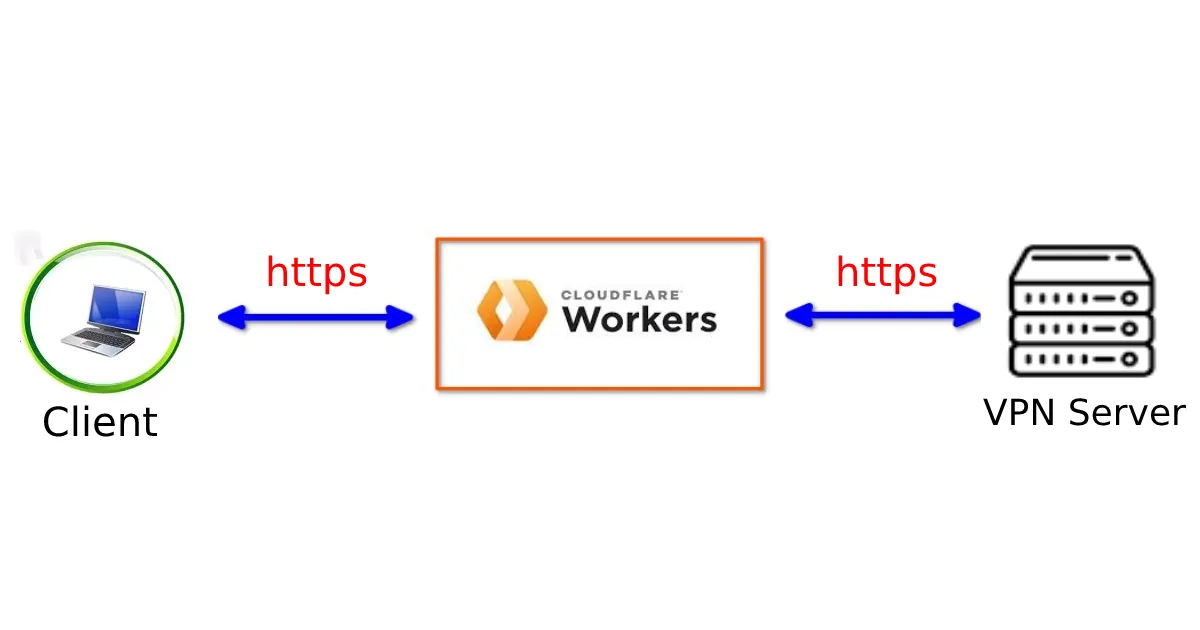
Free plan limit
On Cloudflare's free plan, Workers handle 100,000 requests a day. This is not enough for a server with many users.
1. Requirements on Cloudflare
- Have an active domain on Cloudflare. If you don't, see How to use Cloudflare CDN.
- Make a subdomain for your server (for example
sub.yourdomain.com): in DNS > Records, anArecord with your server's IP. The worker works with this record's proxy on or off. - In SSL/TLS > Overview, set the encryption mode to Full.
- Add the same subdomain to your HiddifyManager panel as a domain, so the panel gets a certificate for it.
2. Make the worker
-
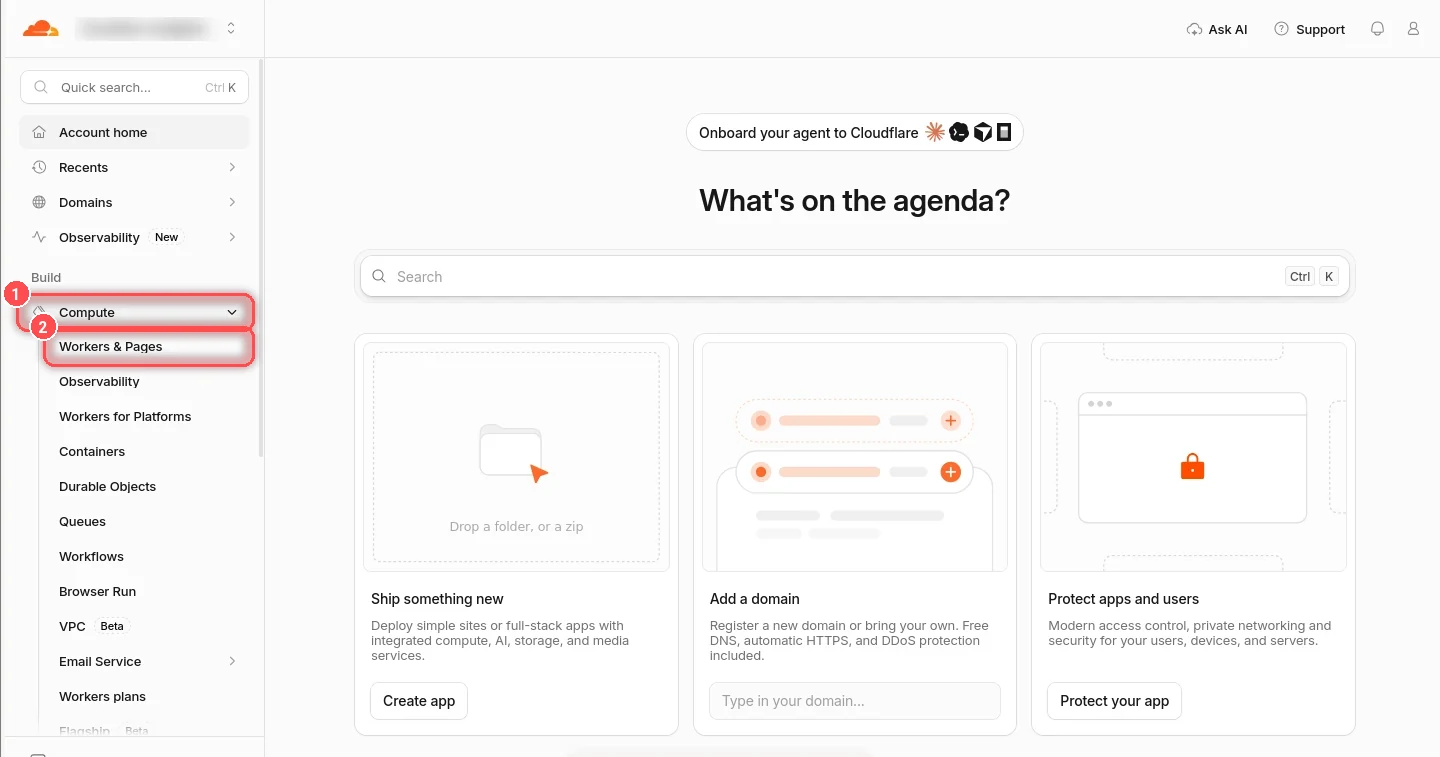
In the Cloudflare dashboard side menu, open Compute > Workers & Pages.
-
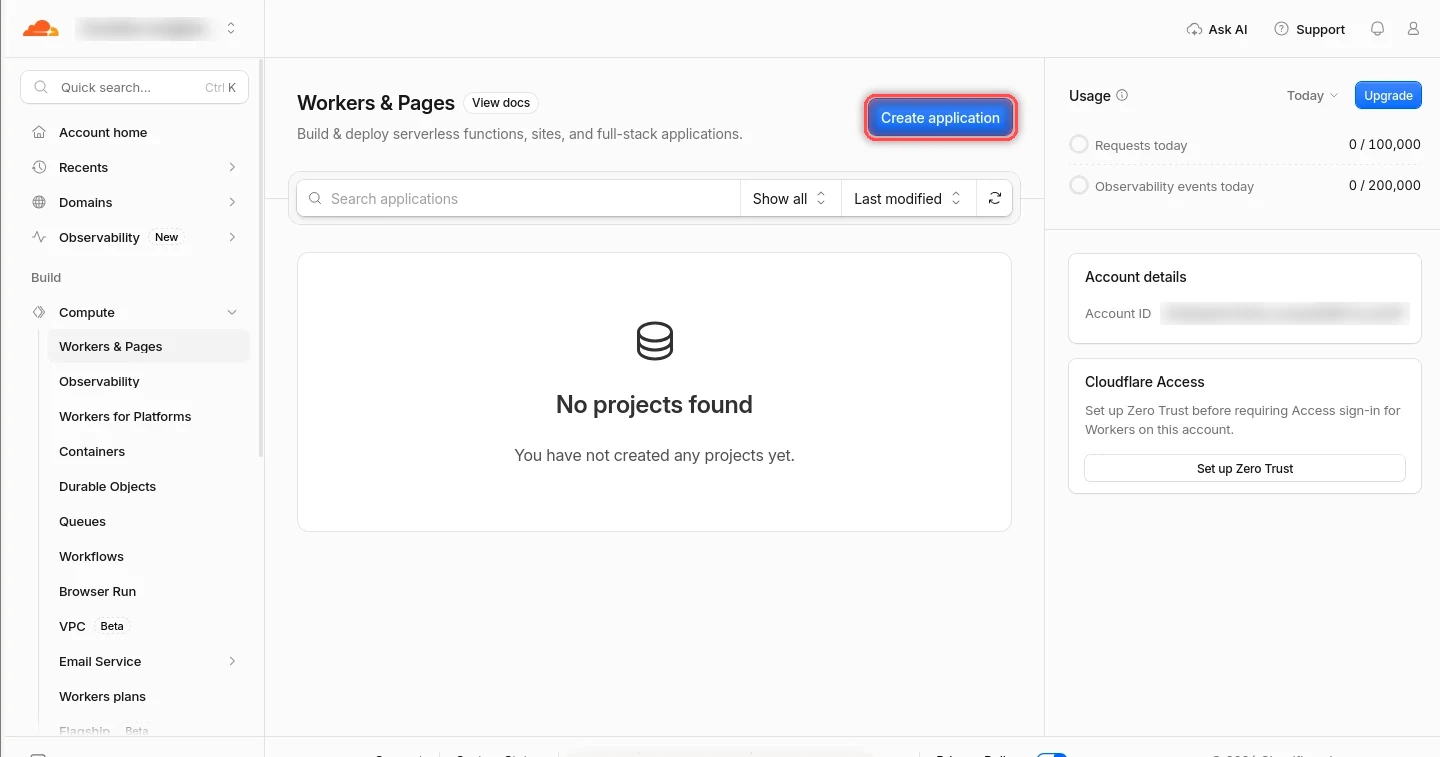
Click Create application. This page also shows the free plan's daily quota (100,000 requests).
-
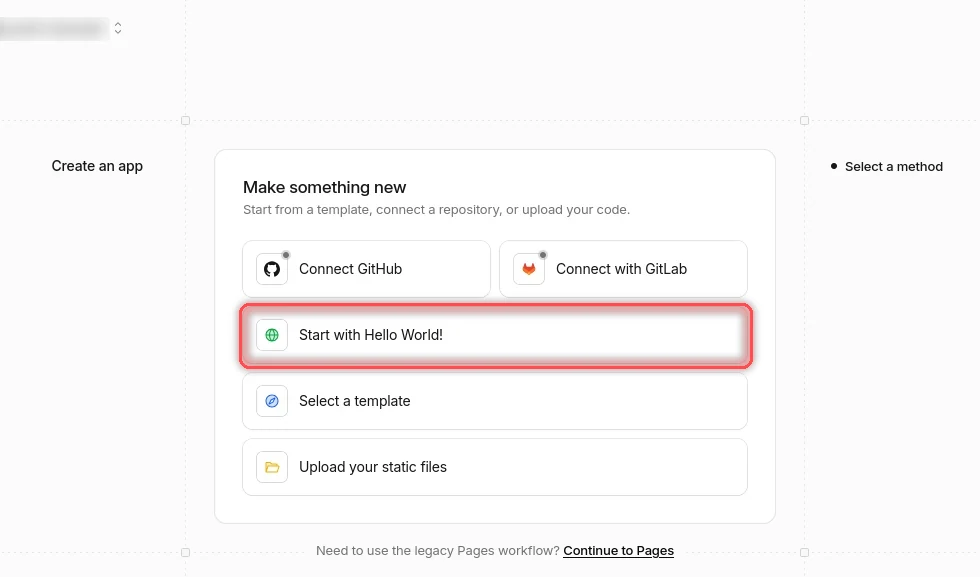
Choose Start with Hello World!.
-
In Worker name, type a name for the worker (for example
hiddify-worker). The worker's address is made from it:worker-name.account-subdomain.workers.dev. Then click Deploy.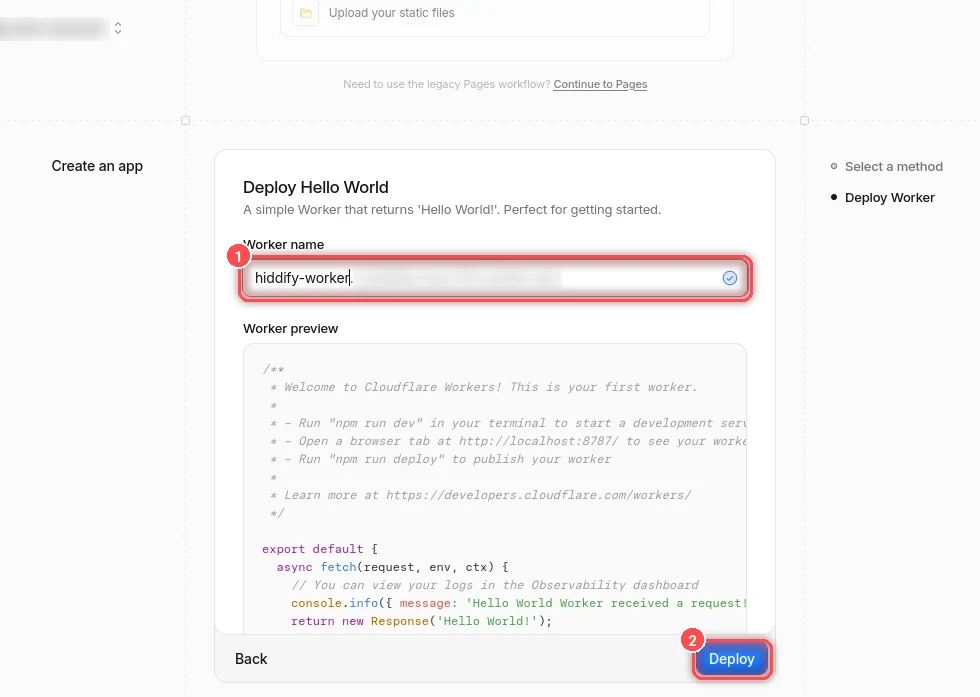
-
The worker's page opens with its
workers.devaddress at the top. Click Edit code to open the code editor.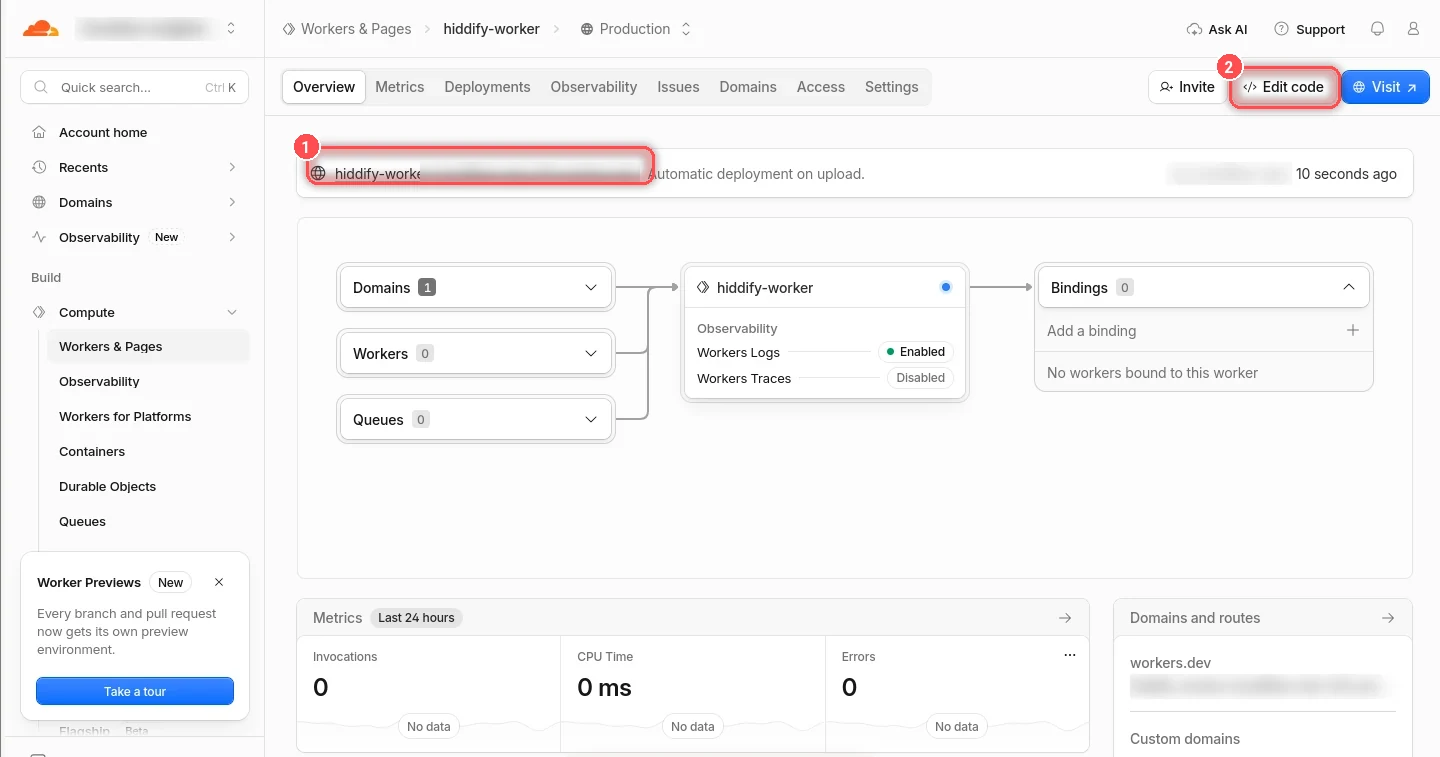
-
In the editor, delete all the default code in
worker.jsand put this code in its place:addEventListener( "fetch", event => { const ip = event.request.headers.get('cf-connecting-ip') || event.request.headers.get('x-forwarded-for') || (event.request.socket && event.request.socket.remoteAddress); let url = new URL(event.request.url); const worker_domain=url.hostname; url.hostname = "sub.yourdomain.com"; url.protocol = event.request.headers.get('x-forwarded-proto') || "https"; let request = new Request(url, event.request); if (ip) request.headers.set('cf-connecting-ip', ip); request.headers.set('Host', worker_domain); event.respondWith( fetch(request) ) } ) -
On line 7, replace
sub.yourdomain.comwith your server's subdomain from step 1. -
Click Deploy above the editor. Version saved means the code is saved and published.
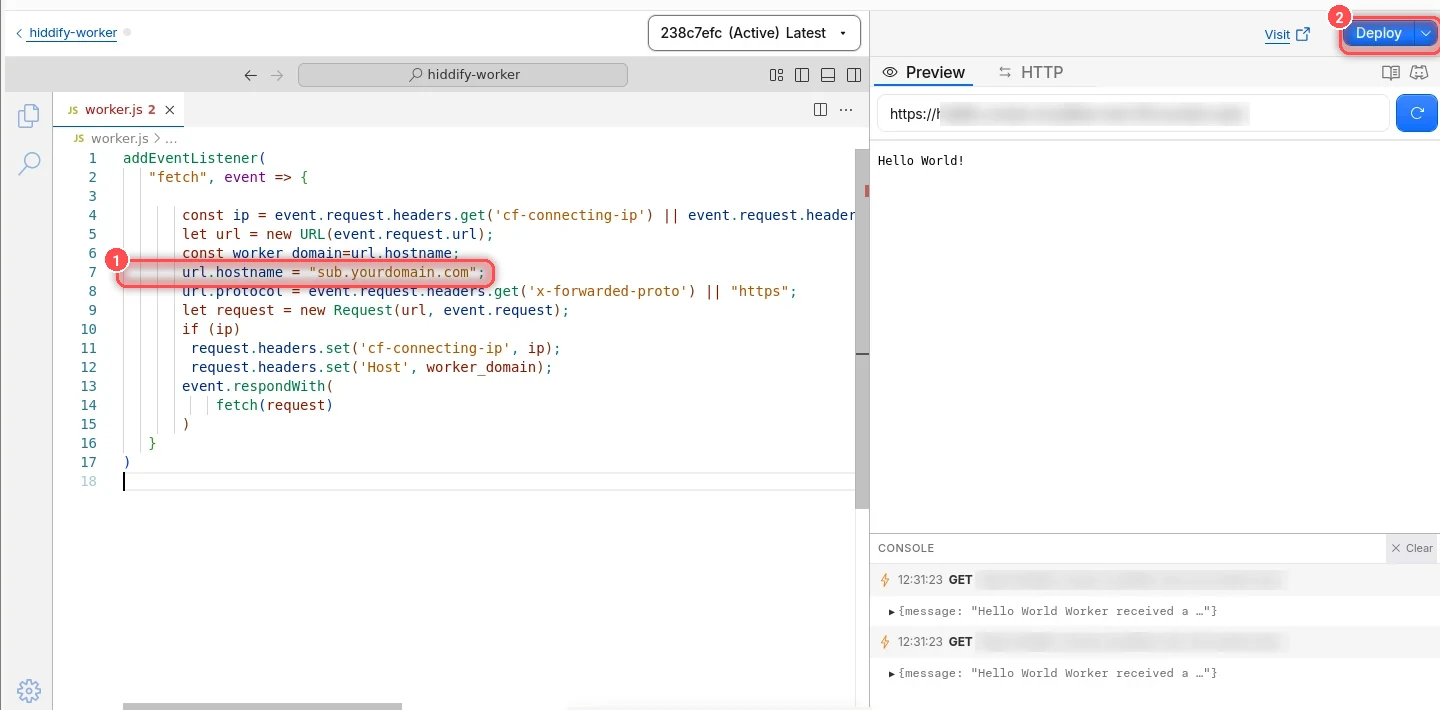
Errors in the preview
If the editor's preview pane (on the right) shows an error, don't worry: publish the code.
Code format
This code uses the older Workers format (addEventListener). Cloudflare still supports it, but has marked it deprecated and recommends the newer Module format.
3. The worker's address
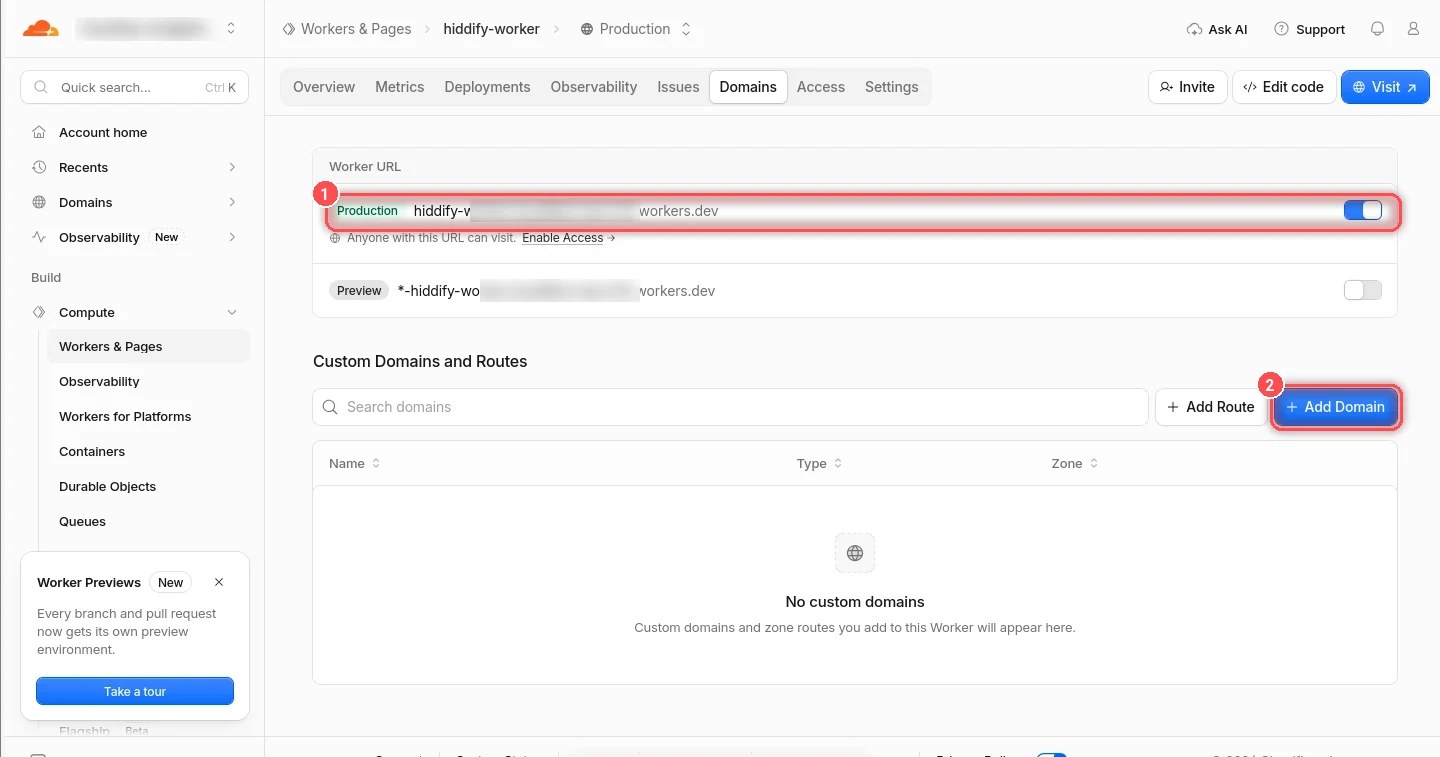
You can see the worker's workers.dev address on the worker's Domains tab, under Worker URL. It is better to give the worker a custom domain on your own domain instead, because workers.dev addresses can be blocked:
- On the worker's page, open the Domains tab.
- Under Custom Domains and Routes, click Add Domain.
-
In the Connect domain window pick your domain, enter a new subdomain in Subdomain (for example
w) and click Add domain. Cloudflare makes its DNS record and certificate by itself. The subdomain must not already have aCNAMErecord.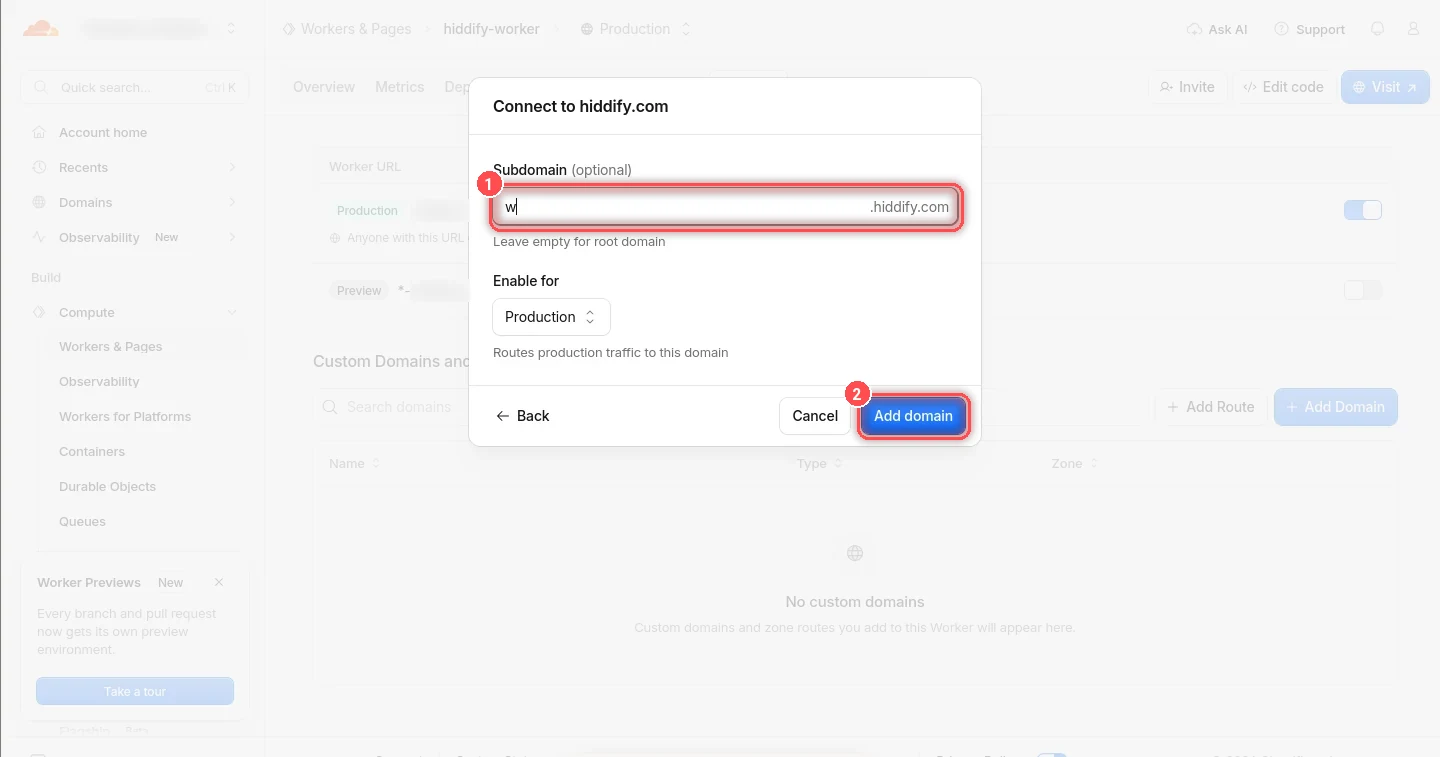
4. Add the worker's address to HiddifyManager
- In the panel side menu, in the Settings group, open Domains and click Add domain.
- In the Domain step, enter the worker's address (the custom domain or the
workers.devaddress) withouthttps://and click Check. -
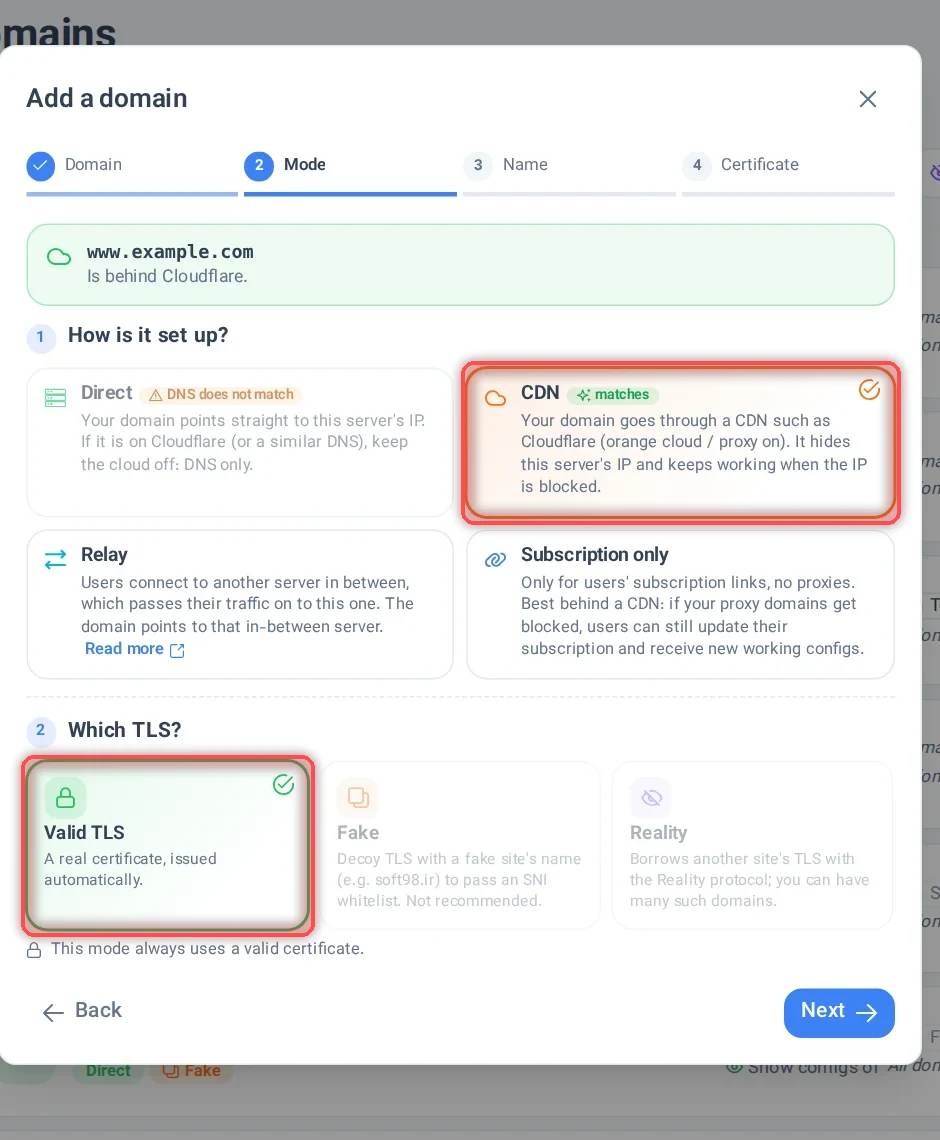
In the Mode step, choose CDN, keep Valid TLS and click Next.
-
Finish the Name and Certificate steps to add the domain.
5. Bring the worker configs into the subscription link
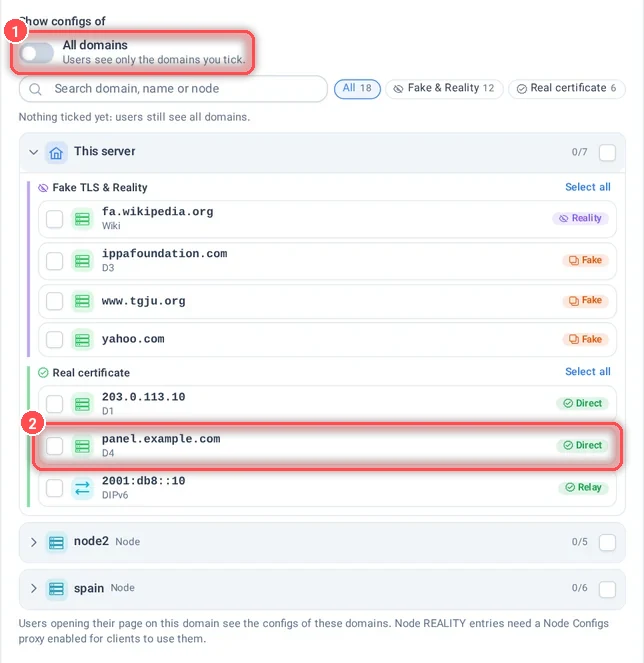
If Show configs of on the domain your users open their user page with is set to All domains (the default), the worker's configs are added by themselves. If you show only some domains, edit that domain and tick the worker domain under Show configs of.
Then ask your users to update the subscription in their app.