Troubleshooting connectivity issues with HiddifyManager and proxies
Configs do not connect, or they connect on one ISP and not on another? The Hiddify Manager panel (v14.5) has tools that find and fix most of these problems. This page tells you which tool to use for each symptom.
First, find where the problem is
The key question is: does it fail for everyone, or only for some users and ISPs? If it fails for everyone, something is broken on the server or in the configs, and the panel tools find it directly. If it fails only on some ISPs, it is filtering, and you must test from that ISP.
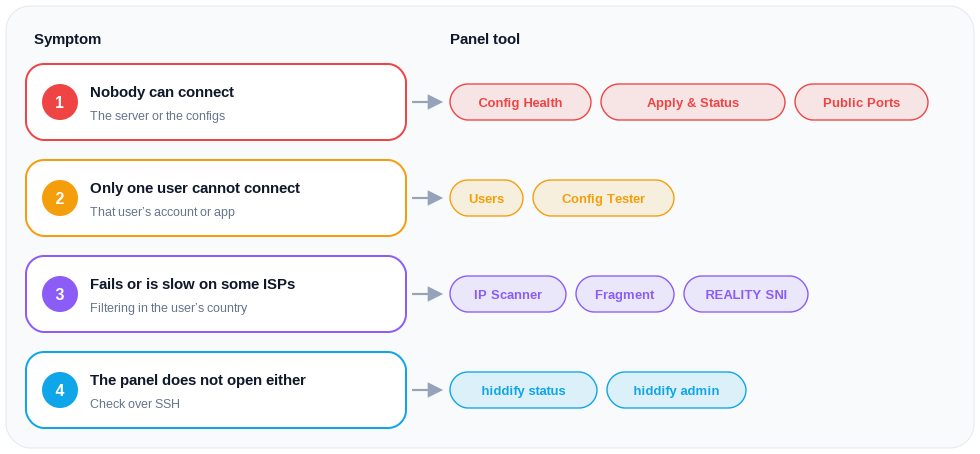
1. Nobody can connect: the server and the configs
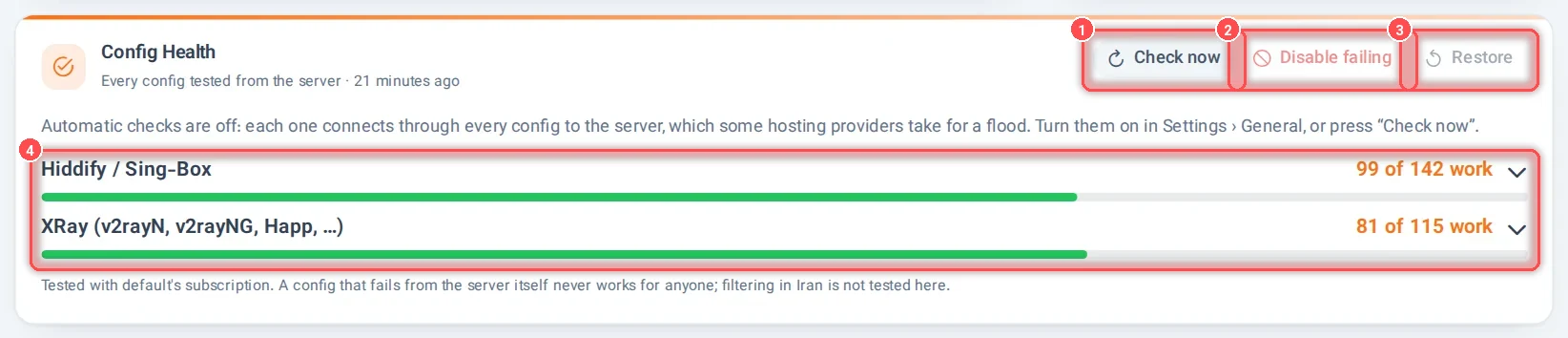
Check config health
On the Dashboard, find the Config Health card and click Check now. The panel tests every config of a subscription from the server itself, the way the Hiddify app and the Xray apps receive it.
Click a row with failing configs to see the reason in plain words:
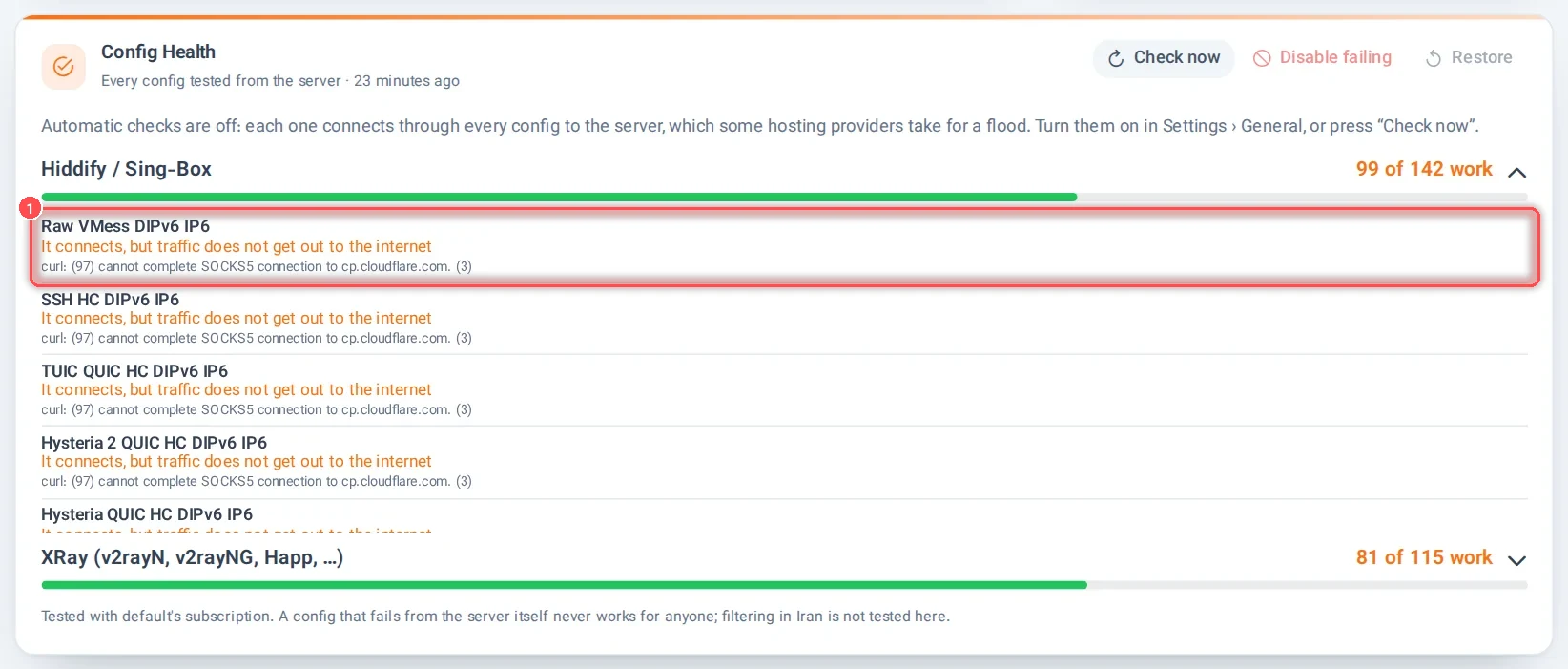
| Reason | What to do, usually |
|---|---|
| Connects, but traffic does not reach the internet | Check the config’s outbound (for example WARP) or the server’s IPv6. |
| Connection refused | That protocol or port is off: turn it on in Protocols and apply. |
| TLS handshake failed | Check the domain’s certificate or its Reality setting in Domains. |
| No answer in time | A service or port does not answer: check the services and the firewall in the next steps. |
Disable failing removes the configs that work for no app from everyone’s subscription, so users do not waste time on them; Restore turns them back on. All about config health
Check the services
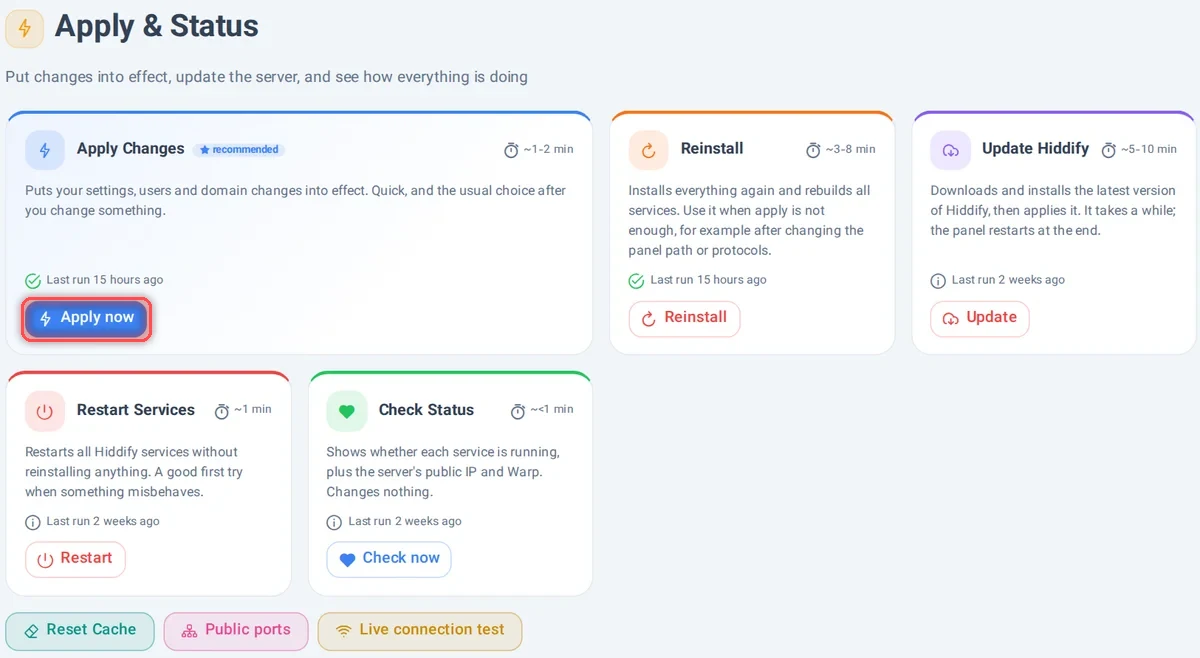
Open Actions in the menu. On the Apply & Status page:
- Check Status › Check now: shows whether each service runs. It changes nothing.
- If a service is down, click Restart. If you just changed settings, click Apply now.
- In Logs, click the eye icon to read that service’s error.
Make sure the ports are open in the firewall
If the services run but no config connects from outside, usually the server’s firewall or the provider’s firewall blocks the ports. On the same Apply & Status page, click Public Ports: it lists every port the server needs open, with ready Firewall Commands (ufw). Open these ports in the server’s firewall and in your provider’s panel.
2. Only one user cannot connect
- In Users, check that the user still has days and traffic left and is not disabled.
-
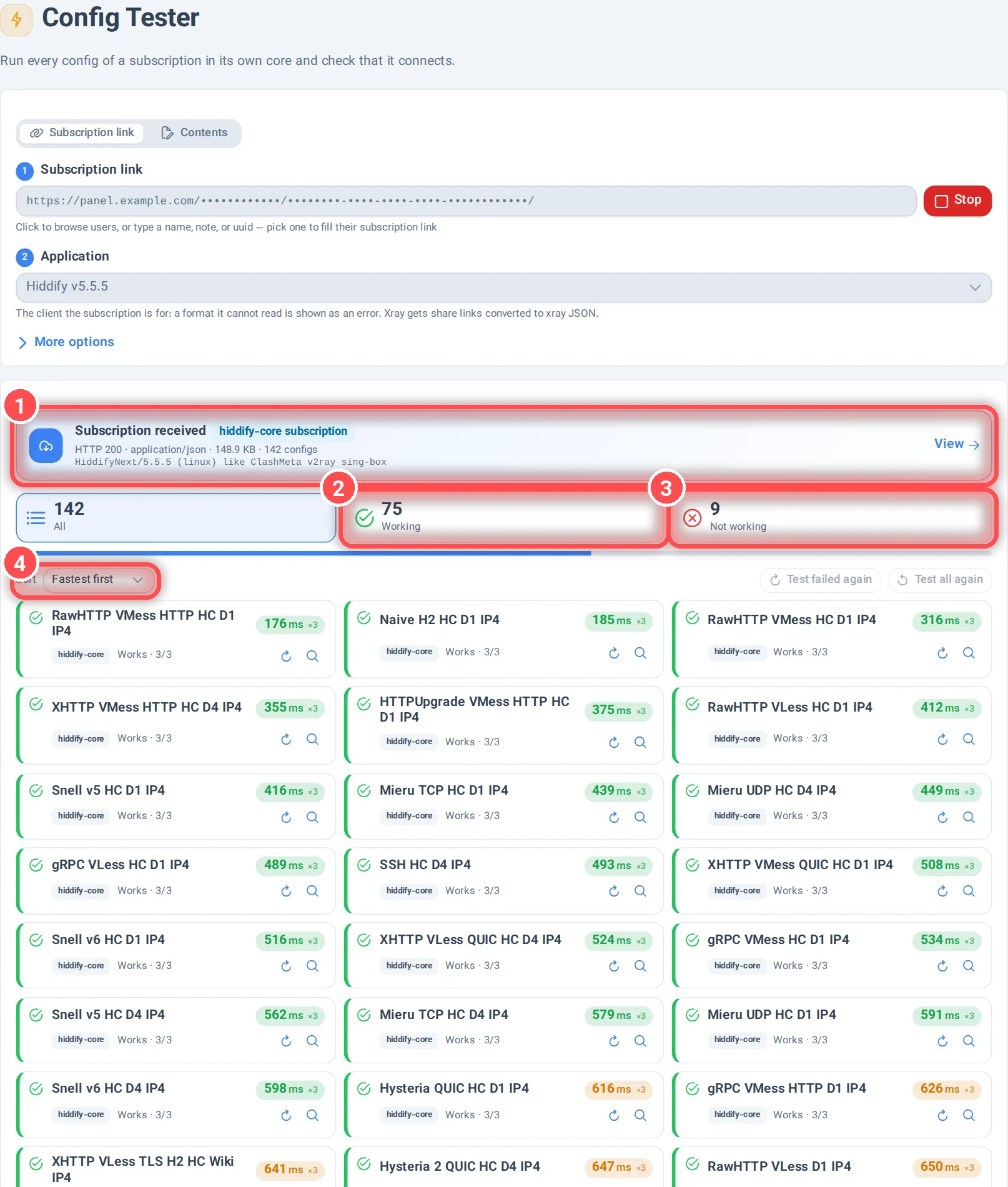
In Tools › Config Tester, click the link box and pick that user, set App to the app the user has, and click Start Test. The panel tests exactly what that user’s app receives.
-
If the configs work here, the problem is the user’s app or internet: ask them to update the subscription in the app. The Hiddify app understands every panel protocol; some other apps do not. The app log shows the exact reason.
3. It fails or is slow on some ISPs: filtering
The tools of part 1 test from the server, so they do not see the filtering in your users’ country. For this part, open the panel’s Scanner (Tools › Scanner) on the ISP that has the problem, with your VPN off; for example once on a phone with one mobile ISP and once with another. The scanner runs in your browser, on your own internet at that moment.
The Cloudflare IP your users get is blocked or slow on that ISP. In the IP Scanner tab, choose the CDN domain and the ISP, click Start, then Save to the Domain. Users get the working IPs with their next subscription update.
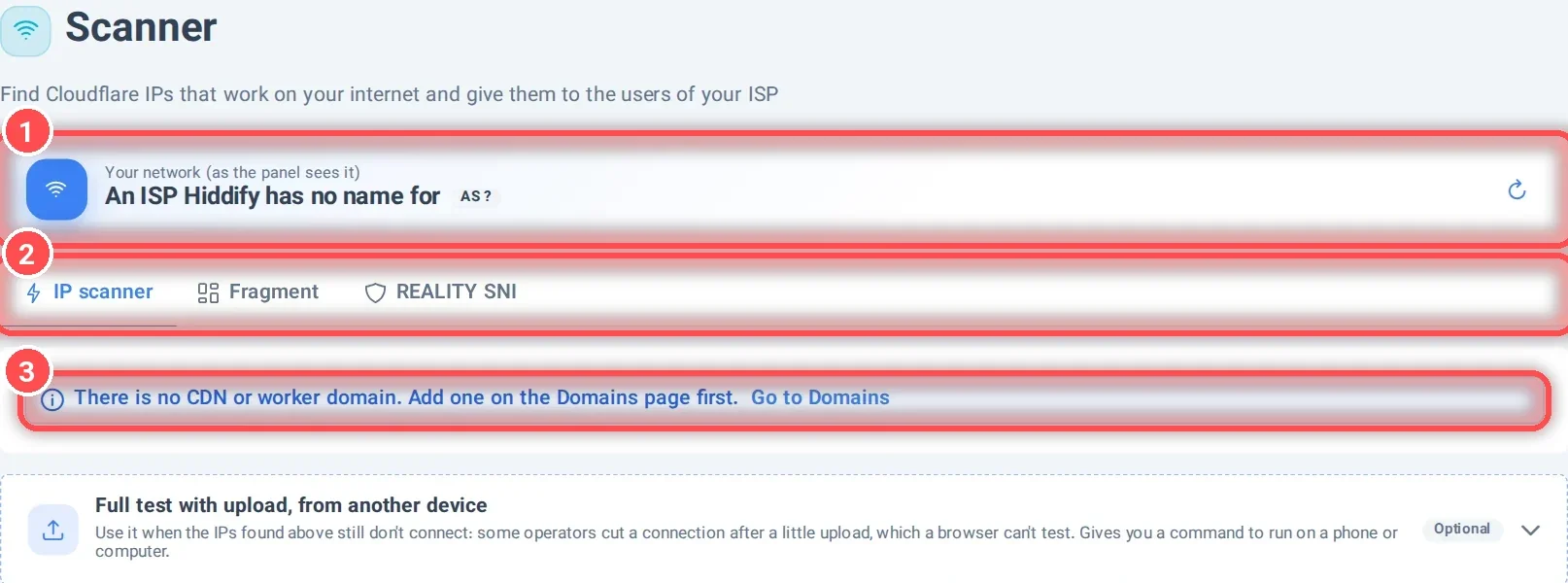
If IPs are found but the connection drops after a little upload, use Full test with upload, from another device.
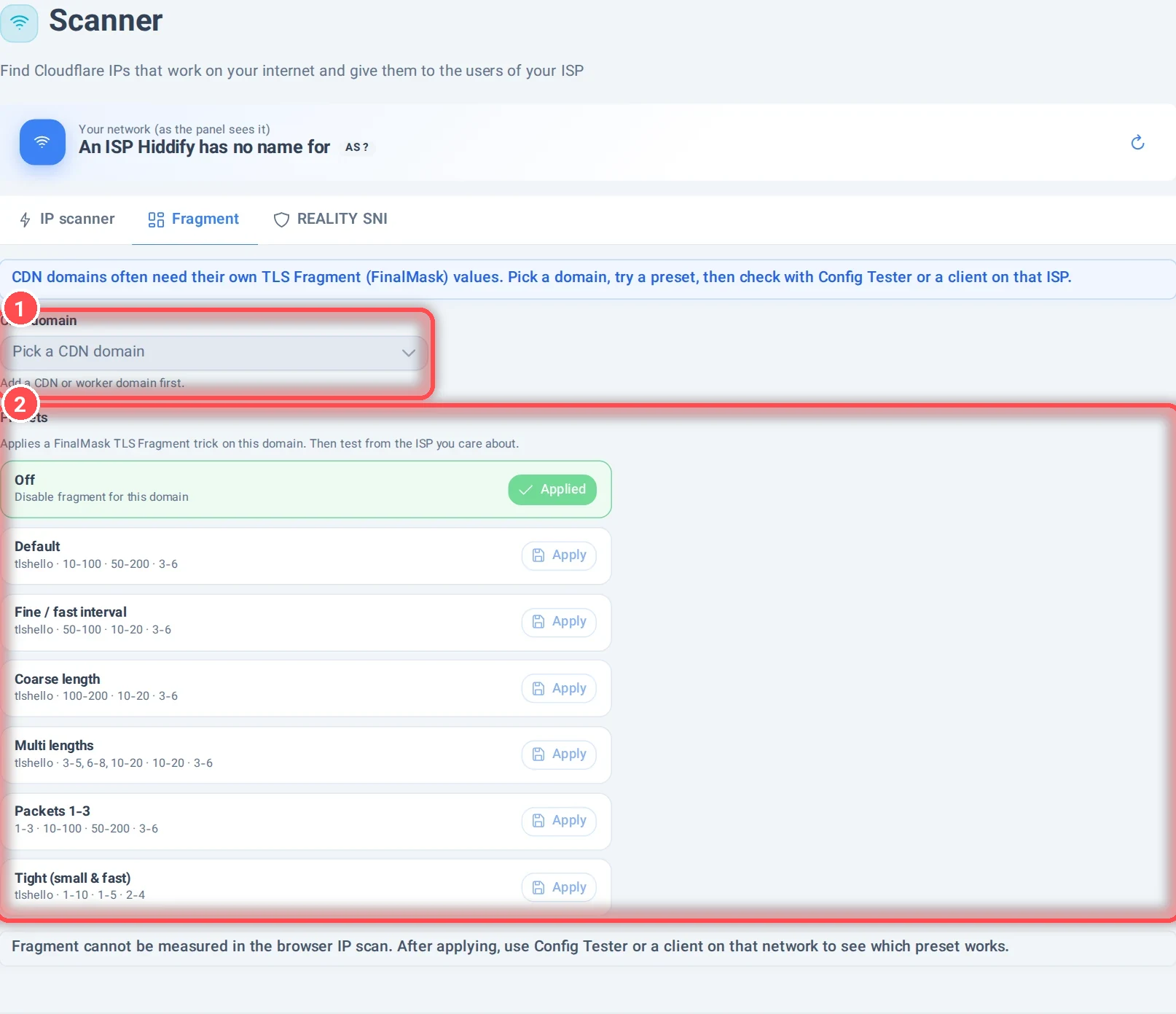
The ISP reads the site name in the first TLS packet. In the Fragment tab, Apply a preset to the CDN domain and check it with an app on that ISP. Hiddify app users can also turn fragment on in the app themselves.
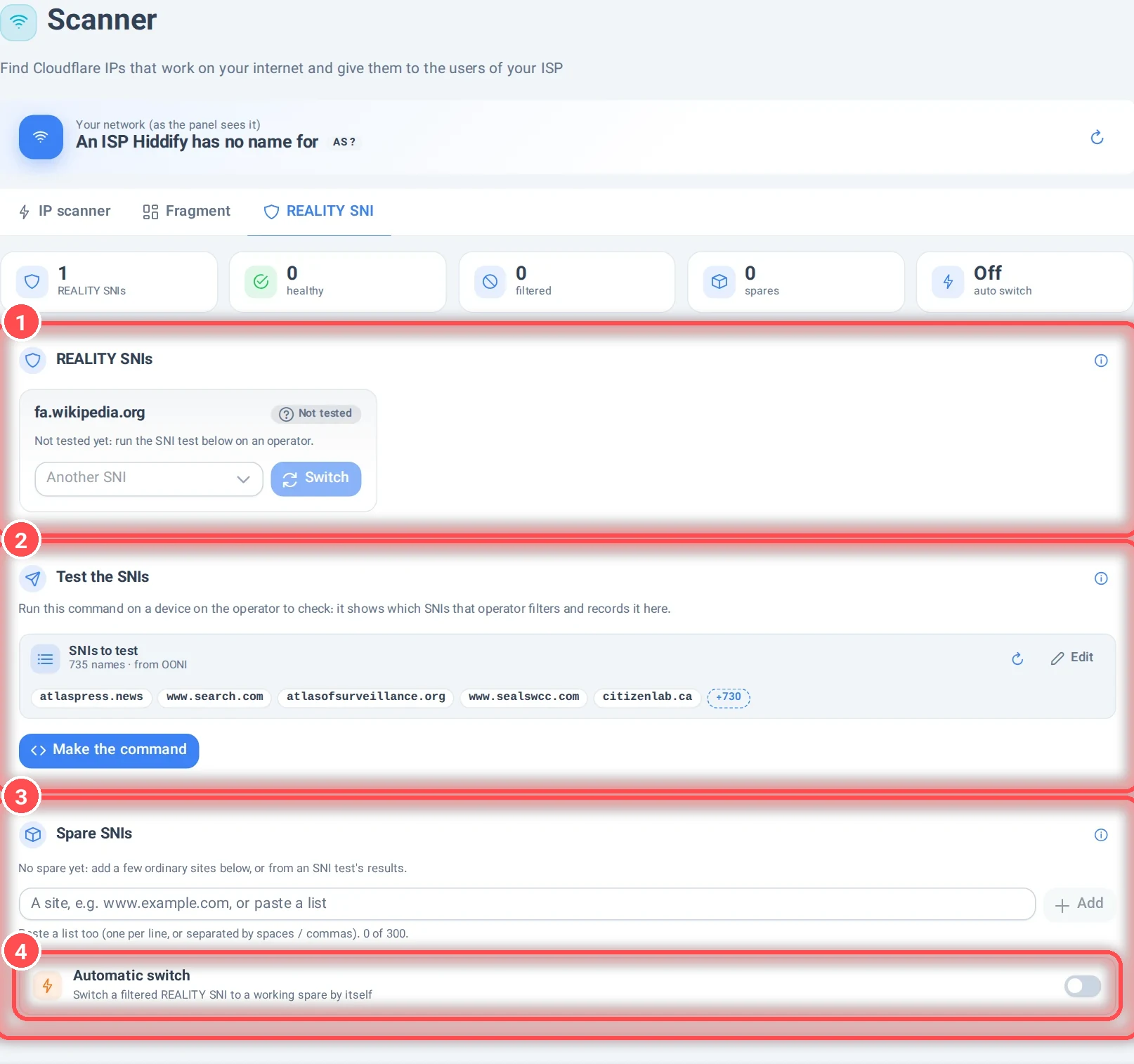
A Reality config looks like a visit to another site (its SNI); if the ISP filters that site, the config fails. In the REALITY SNI tab, click Make the Command and run it on a device on that ISP to find the filtered SNIs. With Automatic Switch, a filtered SNI is replaced by a working Spare SNI by itself.
If the server’s own IP is blocked
Confirm it with How to check if the server IP or domain is clean. The panel cannot unblock a blocked IP: either change the server’s IP (many providers sell a new one), or reach the server through something that is not blocked:
4. The panel does not open either
Connect to the server with SSH and use these commands:
| Command | What it does |
|---|---|
hiddify status |
The status of every service |
hiddify admin |
The current admin links (they may have changed after a change) |
hiddify restart |
Restart the services without changing the settings |
hiddify apply |
Apply the settings saved in the panel |
Or just run hiddify to open the Hiddify Manager menu, with status, admin link and logs.
Still not working?
If another tool connects to the same server and the same domain but the Hiddify Manager configs do not, please tell us. Send the working config link (VLESS, VMess or Trojan) in a GitHub issue so we can add that kind of config to the panel. Before you send it, open the link in Tools › Text Decoders and remove the real server address and the passwords.